
What does AI actually cost a small business?

- AI budgeting
- Vendor risk
- Company knowledge
Short answer: The subscription is the small part, often around US$25 per person a month. The bigger cost is staff time to set up, check and fix the AI's work, so add that up and compare it with doing the job by hand.
What should you count?
Pick one repeated job, not your whole AI budget, and track it for a month. Count staff time at what an hour really costs you.
- Software: seats and usage.
- Setup: building and training, spread over a few months.
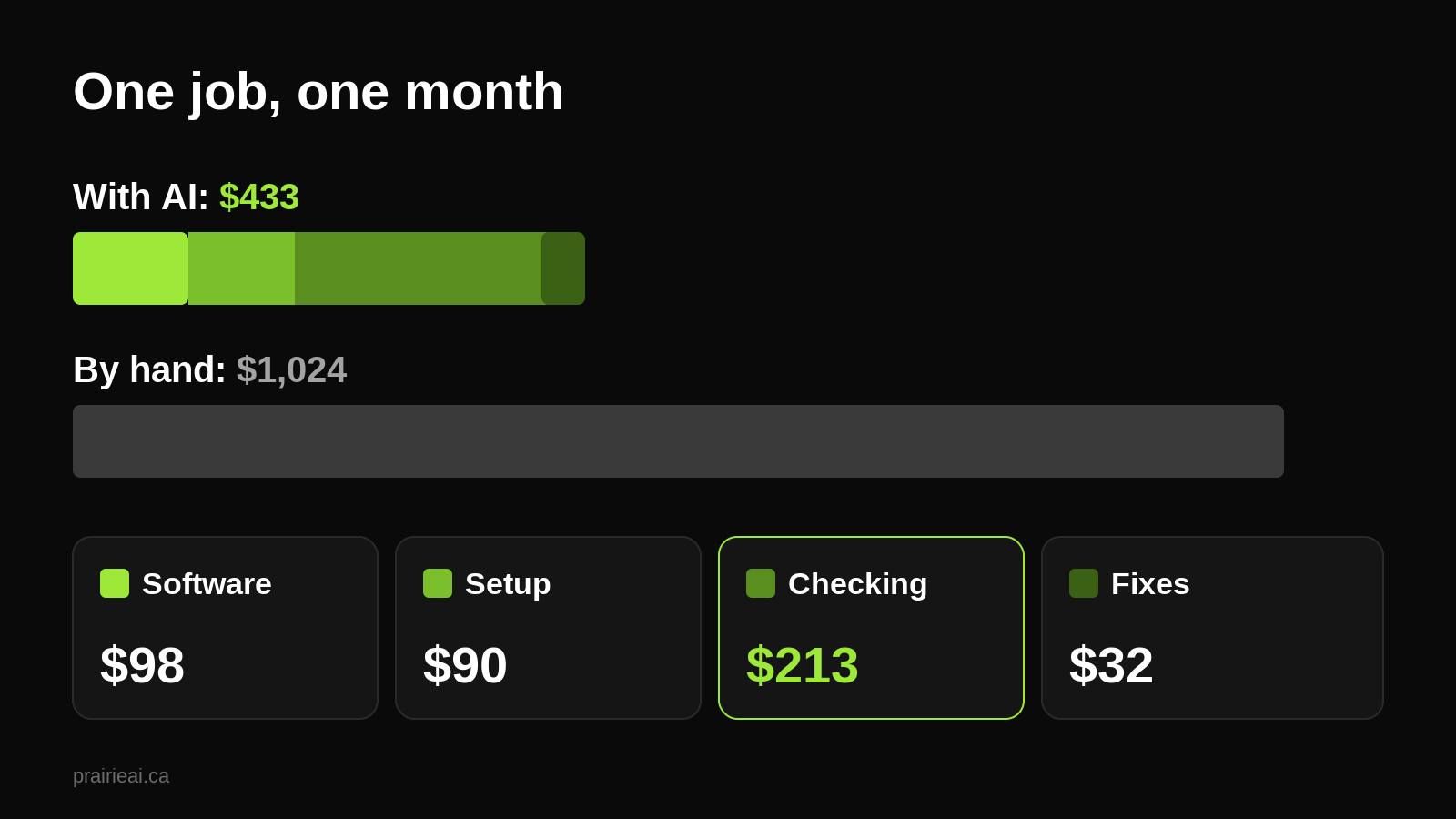
- Checking: minutes staff spend reviewing each result.
- Fixes: redoing the results that came out wrong.
Divide the total by the results you actually kept. A cheap tool that gets half its work thrown out is not cheap. Your AI bill shows what the vendor charged. Your own count adds the staff time the vendor never sees.
What does a real month look like?
Example (illustrative): a Regina plumbing and heating company uses AI to turn 160 after-hours voicemails a month into dispatch notes, and staff keep 148. Software is $98, setup $90, checking $213 and fixes $32, so $433 in total, about $2.93 a note. Doing it by hand at 12 minutes a call would cost about $1,024. Checking costs more than the software, so if checking time doubles, most of the gap disappears. It also assumes the kept notes are as good as hand-written ones, so compare a few with the voicemails before you call it a win.
How do you keep the cost under control?
- Set a spending alert, and know whether it only warns you or actually stops the work. OpenAI's project settings treat those as two different things.
- Watch for repeat runs. A job that quietly retries after failing adds to the bill without producing anything you keep.
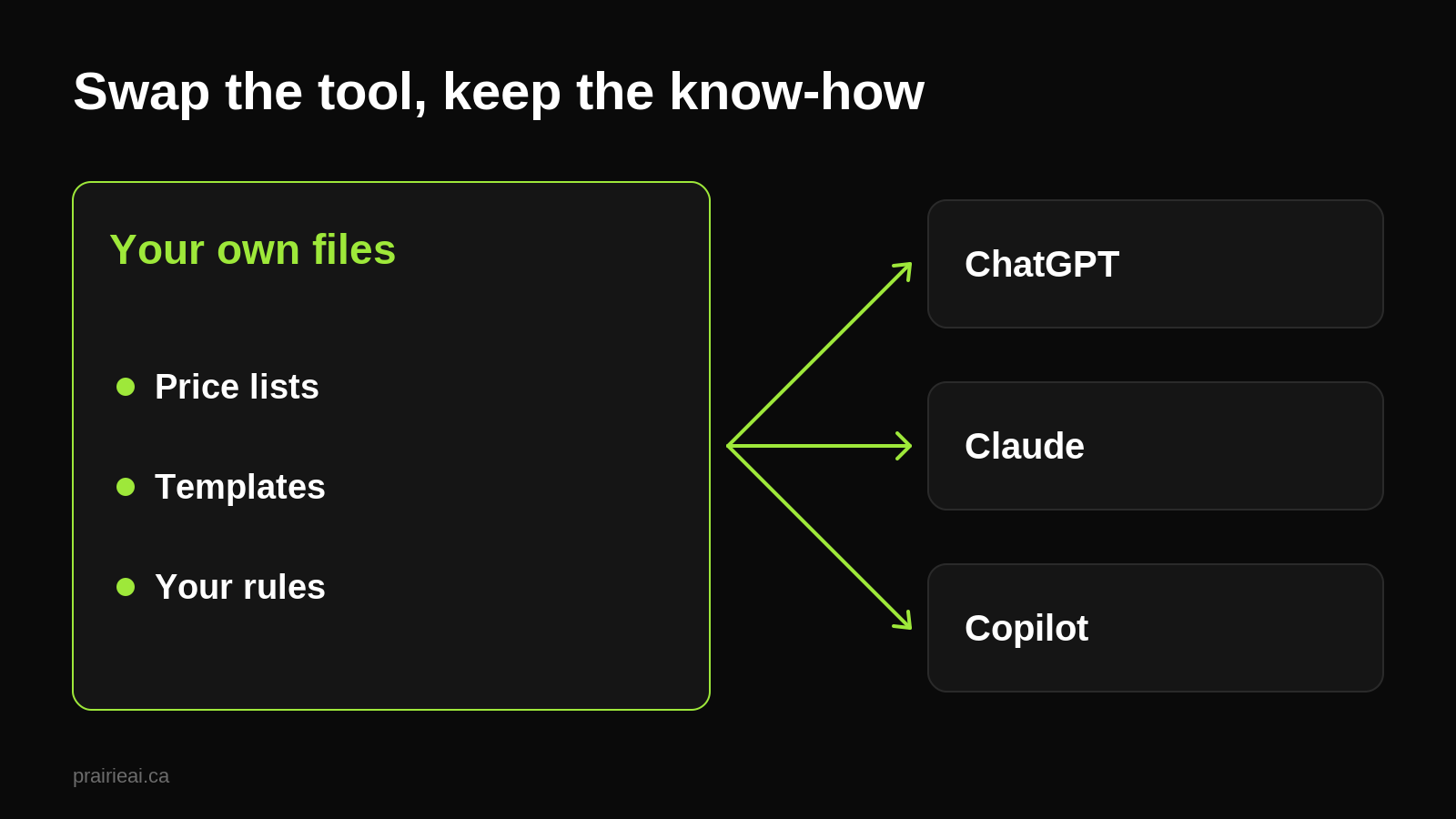
- Keep your price lists, templates and rules in your own files, not in one person's AI chat history.
- Make sure you could switch tools. Vendors change fast: in June 2026, Salesforce agreed to buy Fin, an AI customer-support company.
To work through the numbers for one real job in your office, Contact Prairie AI.