
Can AI help with grant reports and tender bids?

- AI grant reporting
- Bid preparation
- Document workflows
- Human review
Short answer: Yes, if you keep your proof in one folder as the work happens. AI can match that proof to what the funder or buyer asks for, point out what's missing and write a first draft, but a person signs off every number, the price and the final submission.
How does it work?
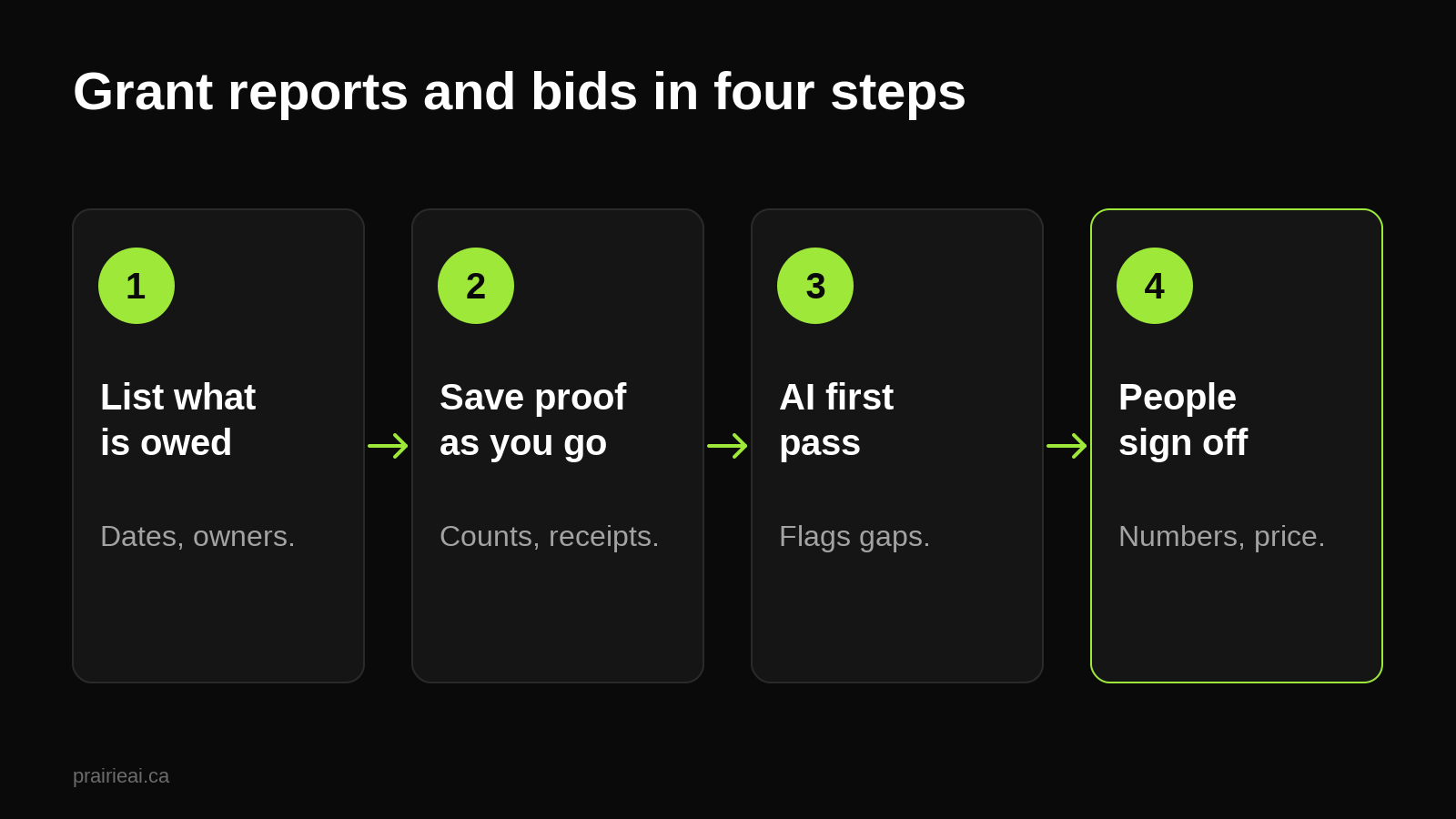
- Make a list when the grant or tender arrives. Due dates, the questions asked, and who owns each piece.
- Save proof as you go. Attendance counts, receipts, insurance and safety certificates, short notes.
- Ask AI for a first pass. It lines up your proof with each question, flags gaps and drafts from your own records.
- People sign off. Counts, costs, price and the submission stay with a named person.
What does that look like in real life?
For example: a Saskatoon mechanical contractor sees a federal facilities tender. AI reads the tender and the company's bid folder and lists every must-have requirement. The insurance certificate is current and the safety summary is ready, but the company profile needs one more project example, and a delivery date needs the estimator to check it against the crew schedule. The owner decides to bid and approves the final response. (An illustrative example, not a client result.)

A grant report works the same way. A good AI note says "the attendance sheet for the last session is missing, confirm the count before using it" instead of quietly filling the gap.
What must a person decide?
AI shouldn't decide whether a cost fits the grant, whether you meet a must-have requirement, or what price to bid. The Government of Canada's AI guide makes the same point: your organization stays responsible for what it puts out. Generative AI guide Keep client names and case notes out of general AI tools and use counts instead.
Two habits keep this safe. If the AI can't point to the file a claim came from, leave the claim out. And name who checks counts, costs and the final submission before the deadline week, not during it.
If your reports or bids eat a week every time, see how we work.