How can AI help a service dispatch office?
- Dispatch operations
- Field service
- AI workflow automation
Short answer: AI can sort the morning's problems, list the parts each van needs and take down caller details. It does the sorting and drafting, and your dispatcher still makes every decision and every promise to a customer.
What does AI do on a dispatch morning?
Don't ask AI for one perfect schedule. Ask it to sort the day's jobs into four piles and say why each job landed where it did.
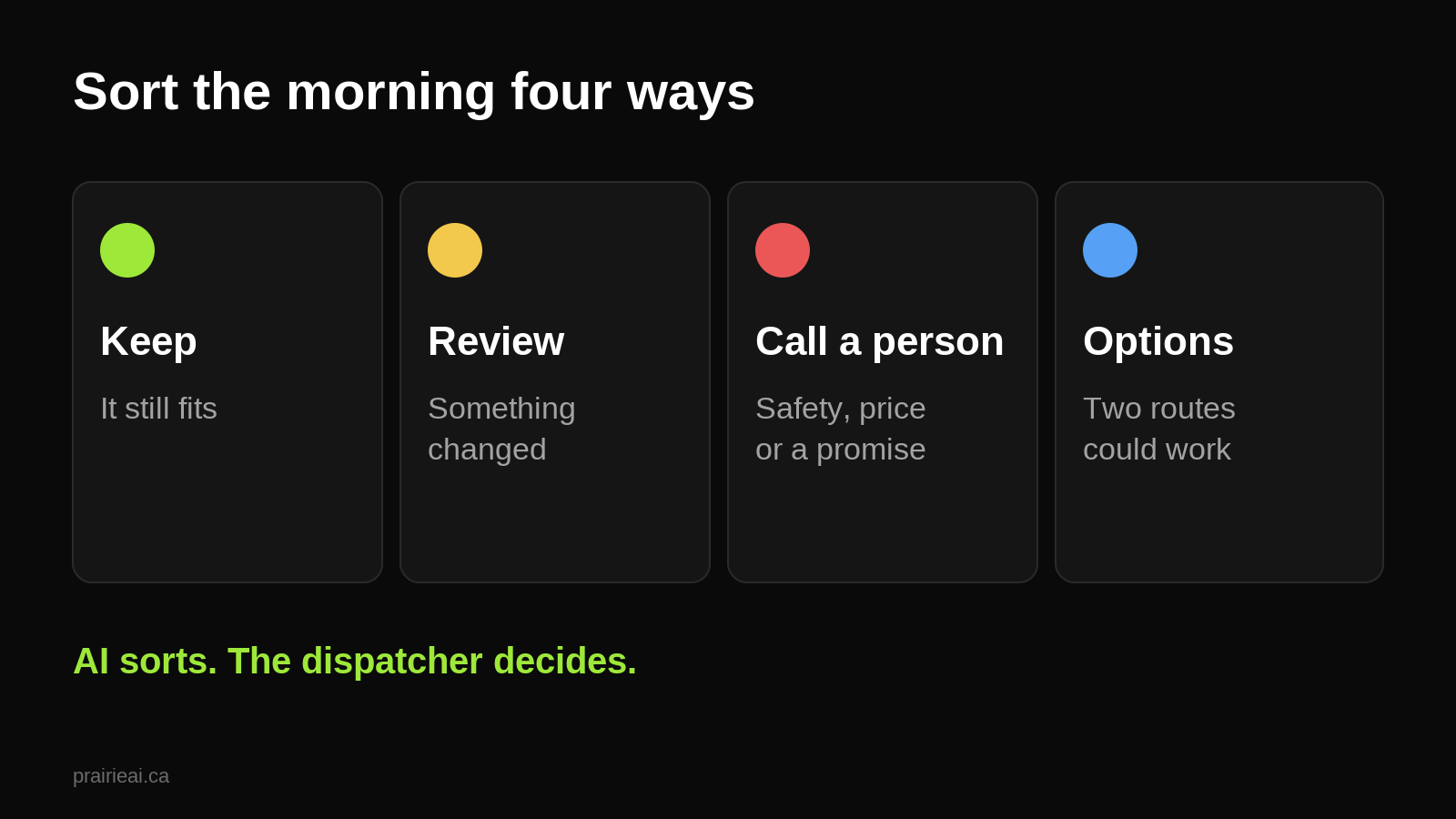
- Keep: the tech, time window and parts still fit.
- Review: drive time, job length or weather changed.
- Call a person: safety, warranty, price or a tight promise.
- Options: two routes could work, so it shows the tradeoff.
For example: a Regina HVAC office has its routes set at 7:30. At 7:40 a no-heat call comes in from a seniors' home. AI flags it as "call a person", because the closest van hasn't confirmed it has the part. It also suggests moving a flexible tune-up to the afternoon to free up another tech. The dispatcher picks the option, and the office phones the customer.
Can it help with parts and phone calls?
- Parts: it lists what's running low on each van and what tomorrow's jobs need.
- Purchases: a person approves every order and every substitute part.
- Calls: AI takes the caller's details and passes them to dispatch.
- Promises: it says it's AI and never gives a time or a price.
- Upset callers, safety or money: straight to a person.
Some field-service software already works this way. Oracle's version checks the parts needed at the start of each day and flags what's missing on the tech's route.

What if the AI tool goes down?
Keep a printed backup card at the desk. It should say where new calls go, which calls get phoned back first (no heat, leaks, gas smell), and what staff never promise. Test it on a quiet morning by turning the AI off for half an hour.
If you want help setting this up for one crew, bring a normal week of jobs. Contact Prairie AI