How should a small business start with AI?
- Getting started with AI
- Small business
Short answer: Start with one small, annoying task, not a big plan. Learn the basics, try AI on that one task with the tools you already use, and only go bigger once it sticks.
What can you do today?
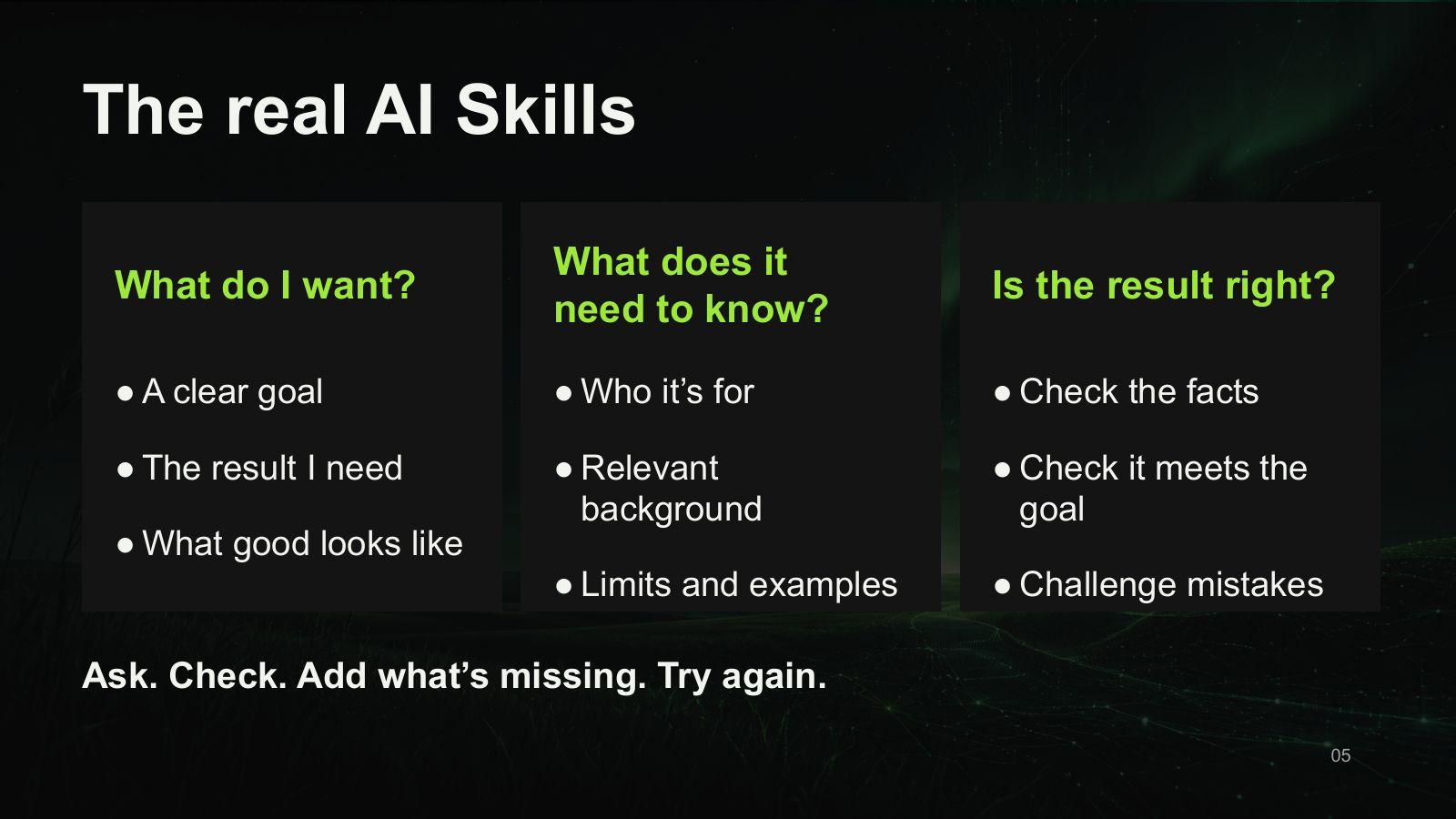
Learn three things before anything else: how to ask, what to check, and what never to paste in. You don't need a course or a new subscription to start. While you learn, keep customer names, account numbers and passwords out of the chat.
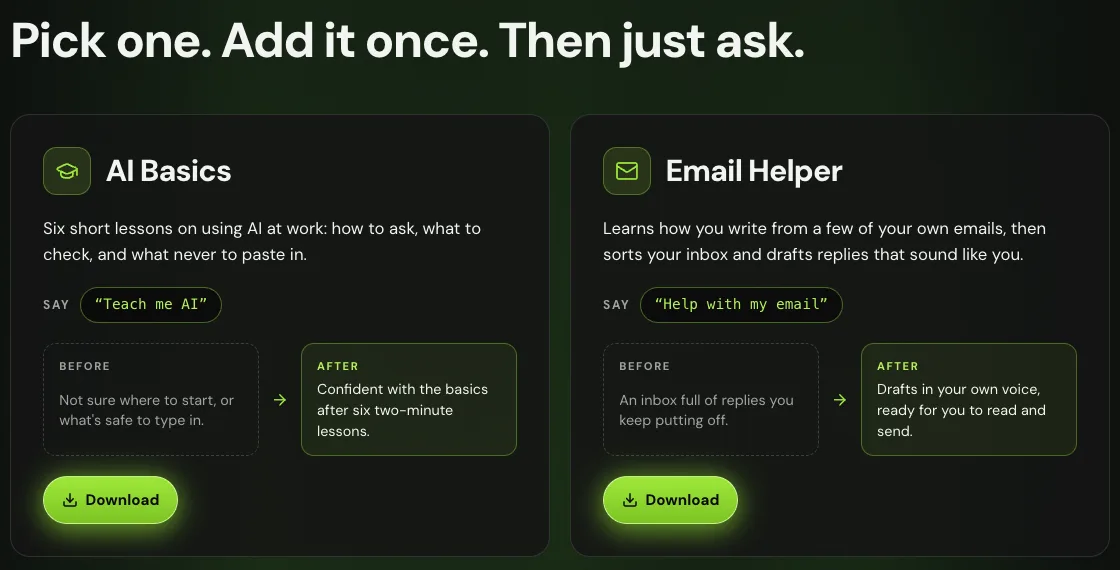
The free AI Basics skill from Prairie AI teaches exactly that in six short lessons. Add it to Claude, type "Teach me AI," and go one two-minute lesson at a time. It also works in ChatGPT. Get it on the free AI skills page.
Which task should you try first?
Pick the job everyone groans about. Good places to look:
- Calls, texts and web inquiries that need a reply
- Quotes and the follow-up after them
- Handing a job from the office to the field
- Reports and typing the same info twice
For example (illustrative): a small Regina office types every web inquiry into the job list by hand, then writes each reply from scratch. A good first try is letting AI draft the reply from the inquiry. Someone still reads it and hits send. If it saves time for two weeks, keep it. If not, try the next task on the list.
What does a sensible rollout look like?
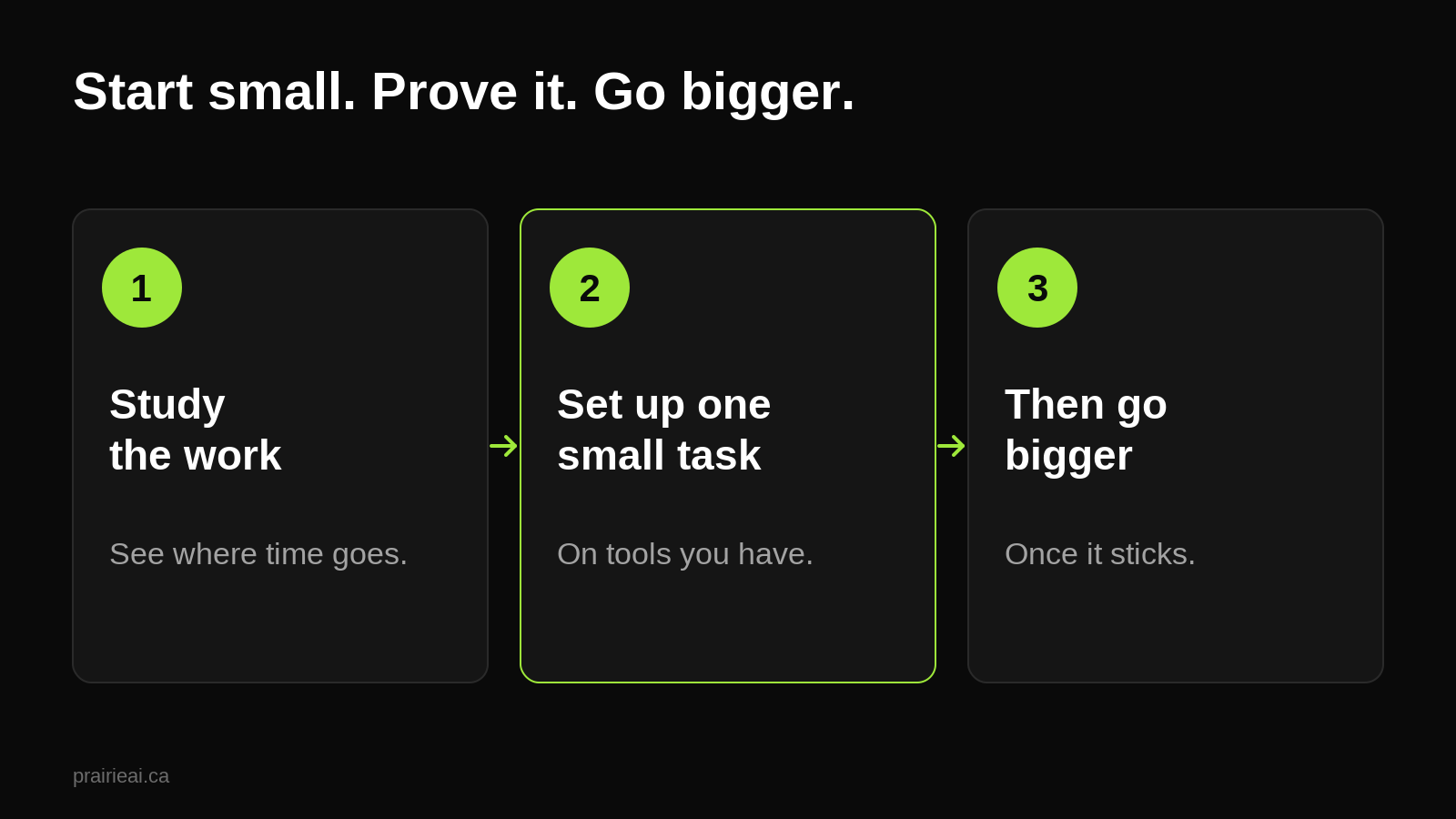
This is the same order Prairie AI follows with clients:
- Study the work. Watch how the job really gets done and find where time leaks.
- Set it up together. One small task, on the tools you already use, tested with the people who will run it.
- Then go bigger. Once the basics stick, take on longer work and build custom tools only where they are worth it.
Through all of it, a person approves anything that touches money or customers. AI drafts and sorts. Your team decides what goes out.
When you want a hand with that first task, see how we work.