Should AI talk to your customers?

- Customer service
- AI chat and messaging
- Marketing operations
Short answer: Yes, for simple questions and taking down details, as long as you tell people it's AI. Anything that commits your business, like a price, a date or a refund, needs a person to approve it.
Which messages can AI answer?
AI replies are now built into tools you already use. Meta's Business Agent, for one, answers customers in WhatsApp, Messenger and Instagram. Turning it on is easy. The real work is deciding who answers what.
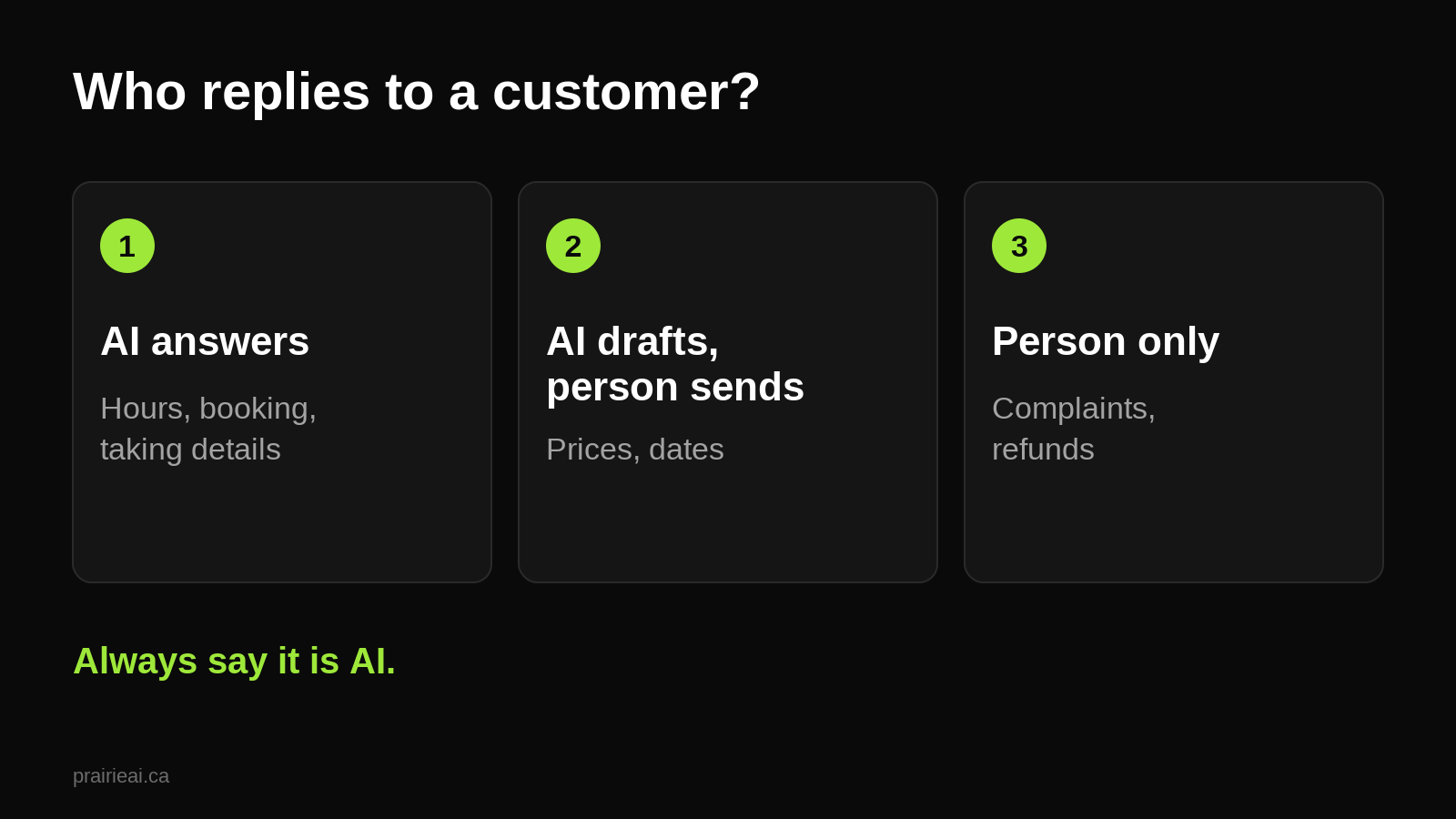
- AI answers: hours, booking steps, taking name, address and photos.
- AI drafts, a person sends: prices, dates, anything a customer could quote back to you.
- A person only: complaints, refunds, safety and upset customers.
If a customer replies twice and still doesn't have an answer, a person takes over. Nobody likes getting stuck in a loop with a bot.
For example: a Regina plumber turns on AI for after-hours Facebook messages. The assistant says it's automated, answers questions about hours and service area, and collects the address and photos. It never quotes a price or says "you're booked." If someone mentions water actively leaking, the reply is "call us now." The office manager checks ten conversations every Monday.
What should never be automated?
Keep these with a person in every channel, even when the AI sounds sure of itself:
- Refunds, credits and discounts
- Prices, arrival times and warranty answers
- Replies to complaints and angry customers
- Anything about safety, health or legal issues
What about reviews and ads?
Google review replies are public, so let AI write the draft and have a person post it. Check that the draft only repeats facts from the review or the job, and shares nothing private. When Google tested AI-suggested replies in March 2026, the business still reviewed and submitted each one. For ads, the Competition Bureau's rules on false or misleading claims apply no matter who wrote the line, so check every price and promise before an ad runs.

Write down which tools staff may use and who approves public replies. The free AI policy gives you a one-page starting point.